


 Acne Scars
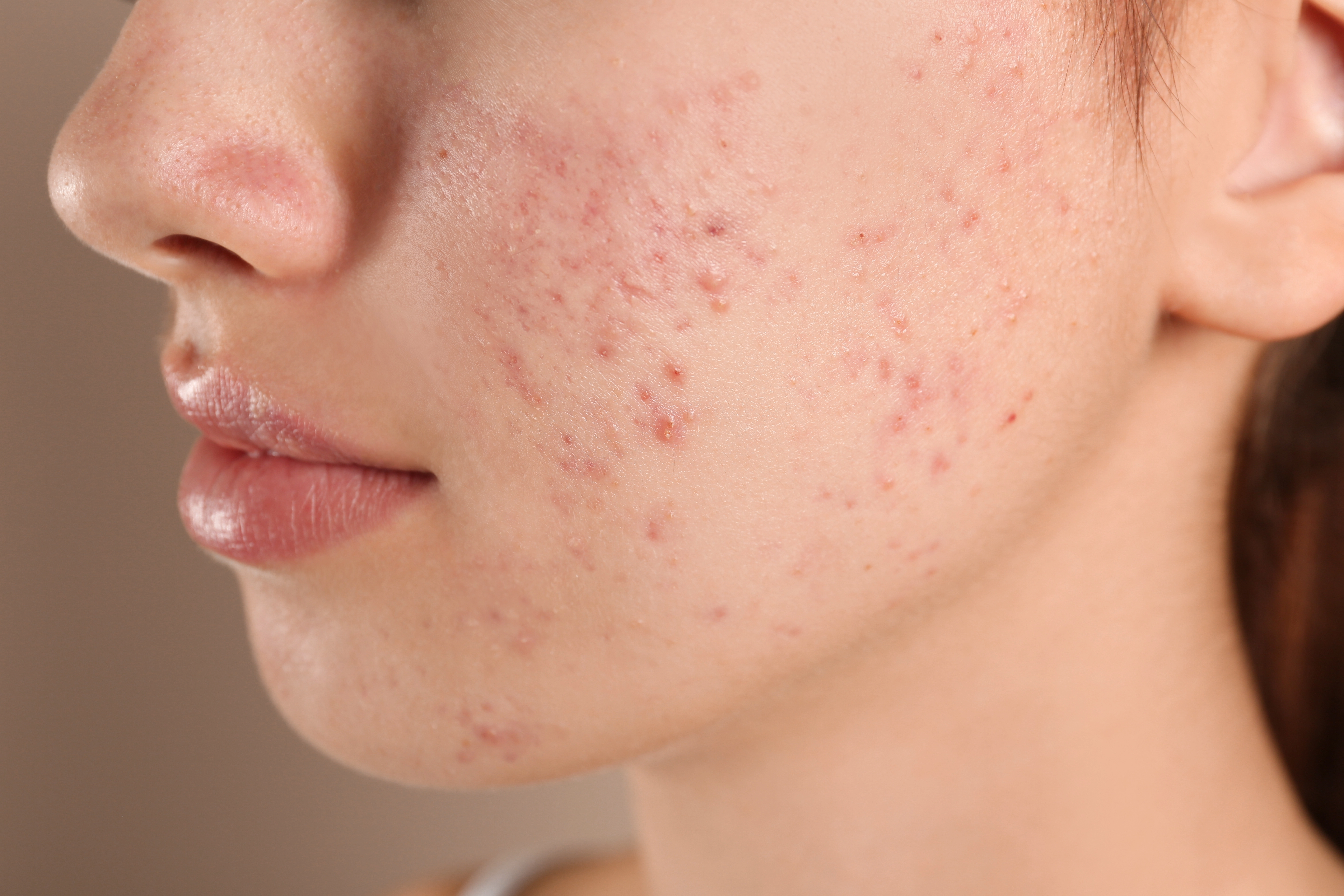
Acne scars are permanent changes in the skin’s structure that remain after inflammation has healed. In cases of more severe acne, the surrounding tissue is damaged and the body forms irregular new collagen during the healing process. This results in indentations, pitting, or uneven skin texture that often do not fully resolve without targeted treatment.
In our practice, we are equipped with all relevant treatment options for both active acne and acne scars.
Photo: © New Africa - stock.adobe.com
What types of acne scars are there?
The most common types are atrophic scars (ice-pick, rolling, and boxcar scars), and less frequently hypertrophic or keloid scars. Each type requires a slightly different therapeutic approach.
How can acne scars be treated?
There are various treatment options, including microneedling, radiofrequency microneedling, chemical peels, and fractional laser treatments.
What role does the CO₂ laser play?
The fractional CO₂ laser is considered one of the most effective options for pronounced acne scars. It ablates microscopic areas of skin, stimulates new collagen formation, and thereby smooths the skin texture in a lasting way.
The CO₂ laser is particularly suitable for patients with moderate to deep atrophic scars and lighter skin types. Individual consultation is essential to select the most appropriate method.
Depending on the type and severity of the scars, 2–4 sessions are usually recommended. Treatments are typically spaced several weeks apart to allow the skin to fully regenerate.
How does radiofrequency microneedling work?
Radiofrequency microneedling combines fine needles with controlled radiofrequency energy. The needles penetrate the skin and deliver heat directly into the deeper layers, precisely stimulating collagen and elastin production. This method is particularly suitable for rolling and boxcar scars and is ideal for patients who prefer minimal downtime. After treatment, the skin is usually only mildly red for a few days. It is also one of the few options that can generally be used on darker skin types.
How does fractional picosecond laser treatment work?
A fractional picosecond laser delivers extremely short energy pulses in the picosecond range into the skin. These ultra-short pulses create microscopic, pinpoint tissue channels (so-called micro-injury zones) without causing extensive damage to the surrounding skin. At the same time, the photoacoustic effect generates pressure waves that break up scar tissue and stimulate the body to produce new collagen and elastin. As a result, the structure, depth, and surface of acne scars improve with minimal downtime. This treatment is also considered safe for darker skin types.
Are there any risks or downtime?
After radiofrequency microneedling, mild redness and swelling can be expected for 1–2 days.
After CO₂ or picosecond laser treatments, healing usually takes 7–14 days, as crusting, redness, and a sensation of tightness may occur. Final results develop gradually over several months.
With chemical peels, downtime depends on the substance used; with modern acid combinations, it can often be reduced to just a few days.
Why choose “Medizin am Hauptbahnhof”?
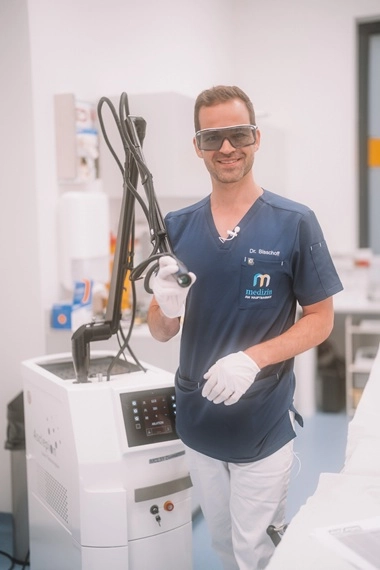 We are proud to offer all relevant treatment options and to have extensive experience due to our high case volume. In our Vienna practice, our dermatologists and cosmetologists work closely together in an interdisciplinary approach to find the best possible solution for each patient.
The first step is a holistic initial consultation. We assess existing scars and, taking into account your skin type, preferences regarding downtime, the time of year, and of course your budget, we develop an individualized treatment plan together.