

 PERIORAL DERMATITIS
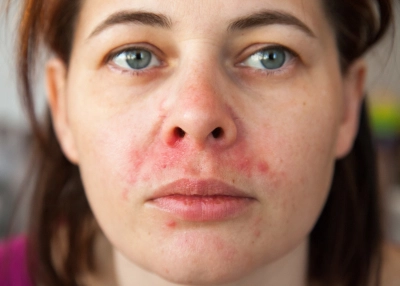
PERIORAL DERMATITIS IS A COMMON PROBLEM FOR MANY WOMEN BETWEEN THE AGES OF 20 AND 50. ABOVE ALL, THIS INFLAMMATION CAUSES REDNESS AROUND THE MOUTH AND NOSE, FLAKY SKIN, AND NODULES OR PUSTLES CAN ALSO DEVELOP. THE EYES CAN ALSO BE AFFECTED BY PERIORAL DERMATITIS. THIS SKIN DISORDER IS OFTEN STRESSFUL FOR THOSE AFFECTED, AND CAN ALSO BE PARTICULARLY PERSISTENT. IN MANY CASES, IT IS ONLY WITH MEDICAL HELP THAT THE PROBLEM CAN BE MANAGED AND CONTROLLED.
Photo: © misalukic – stock.adobe.com
-
What is perioral dermatitis?
-
What are the symptoms?
-
How does perioral dermatitis develop?
-
What type of treatment is available?
-
I tried cortisone treatment, but the problem worsened. Why?
-
Which cosmetics and care products can I use?
-
Are there any home remedies available that can help?
-
Can men be affected too?
What is perioral dermatitis?
Perioral dermatitis is a non-contagious skin disorder. It mostly affects the area around the mouth, nose, and eyes. Perioral dermatitis is also referred to as "air hostess disease", as it often affects women who care excessively for their skin.
What are the symptoms?
Redness, blemishes and sometimes dry patches around the mouth, nose and eyes can occur in bursts, accompanied by itching or burning, as well as a feeling of tightness. However, these symptoms can also indicate other skin conditions such as acne, rosacea, or an allergy.
How does perioral dermatitis develop?
It is assumed that perioral dermatitis is triggered by an imbalance of the local flora (the body's own germs), caused by excessive use of skin care products, make-up, and aggressive cleaning products. Due to the resulting redness and dryness that appears, the skin usually continues to be incorrectly cared for (or over-cared for) and the problem is exacerbated. Cortisone ointments combat the redness for a short time, but the body's own microbe balance becomes disrupted and this results in a worsening of the problem after discontinuation of the cream. Stress and UV light can also have negative effects.
What type of treatment is available?
For treatment to be successful, the causes must be addressed. In many cases, this means a significant reduction and a later change to the care routine. In milder cases, a so-called "zero treatment", i.e., eliminating the use of all cosmetics, can lead to improvement. In more severe cases, antibiotics (topical or oral) or an anti-inflammatory cream can be prescribed for a short time. It is important not to use creams that contain cortisone or other irritant lotions as these often worsen the skin's appearance. Treatment should always be undertaken after consulting with a dermatologist.
I tried cortisone treatment, but the problem worsened. Why?
After cortisone treatment, the body's defences are weakened because the cortisone disrupts the normal colonization of the skin. Afterwards, this often leads to the unwanted outcome of a worsening of the skin’s appearance.
Which cosmetics and care products can I use?
In general, you should choose only light products without additives or fragrances. Serums or fluids are best. The rule here is: less is more!
Are there any home remedies available that can help?
Compresses with green or black tea can relieve the symptoms of perioral dermatitis due to the tannins they contain.
Can men be affected too?
Yes. Men can also develop perioral dermatitis.
We are there for you in our center in Vienna!
FAQ – Perioral dermatitis
Here you will find answers to the most important questions about perioral dermatitis.
-
What is perioral dermatitis?
Perioral dermatitis is an inflammatory skin condition that causes redness, small bumps or pustules, and dry, sensitive skin around the mouth. Areas around the nose and eyes may also be affected.
-
What causes perioral dermatitis?
Common triggers include excessive skincare, heavy or occlusive creams, makeup, aggressive cleansers or the use of topical steroids. These factors overwhelm the skin barrier and trigger inflammation.
-
What are the typical symptoms?
Typical symptoms include redness, burning papules, small pustules, tightness and dry, flaky skin around the mouth. The skin often becomes highly sensitive to skincare products.
-
How is perioral dermatitis treated?
Treatment often starts with “zero therapy”: stopping creams, heavy skincare, makeup and steroid creams. Mild anti-inflammatory topicals or, in more severe cases, antibiotics may be added.
-
How long does healing take?
Healing usually takes a few weeks to several months. A short initial worsening may occur before the skin gradually improves.
-
Which triggers worsen perioral dermatitis?
Heavy creams, wrong cosmetics, lip products, sunscreens, humidity, heat, masks, stress and steroid creams can trigger or worsen flare-ups.
-
Do diet and lifestyle matter?
Stress reduction, gentle skincare, good sleep and avoiding irritants support healing. Diet plays a minor role but may influence inflammation to some extent.
-
Why should I choose Medizin am Hauptbahnhof?
Our clinic provides precise diagnostics, modern treatment options, experienced dermatologists and cosmetologists and gentle, personalized therapy. With our central location in Vienna and short waiting times, patients receive fast, guideline-based care.