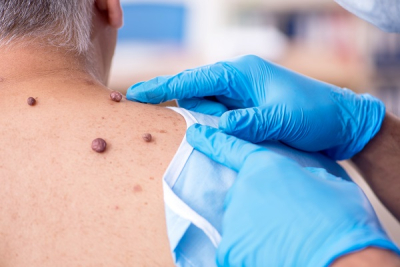


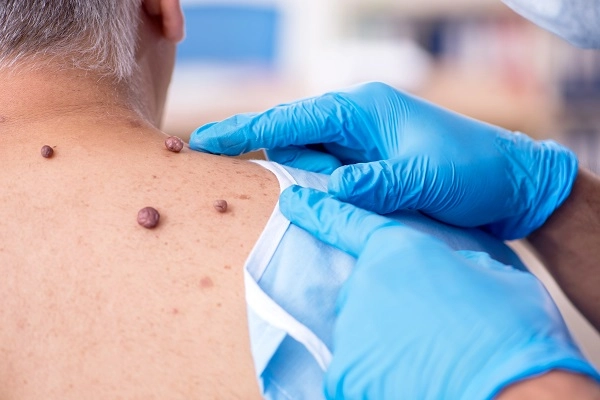
 Bleeding or Changing Mole: When Should You See a Dermatologist?
Has a mole changed, started bleeding, become itchy, developed a crust, or begun to look different from before? Changes like these do not automatically mean skin cancer. However, they should be taken seriously and assessed by a dermatologist, particularly if there is no obvious explanation such as an injury.
Even if you attend regular skin checks, you should not necessarily wait until your next routine appointment: a new or changing mole can itself be a reason to schedule a mole check.
My mole has changed – what does it mean?
Moles can change over the course of a lifetime, and not every change is abnormal or dangerous. What matters is whether a change is new, unusual, progressive, or occurring within a relatively short period of time.
Pay particular attention if a mole:
- has become larger,
- has changed shape,
- has become asymmetrical,
- has developed an irregular or poorly defined border,
- has become lighter or darker,
- contains several different colours,
- has become raised or nodular,
- has changed in texture or surface,
- has become scaly or crusted,
- has started to itch or hurt,
- is oozing,
- or starts bleeding without an obvious injury.
A mole that suddenly looks noticeably different from your other moles should also be examined.
What changes in a mole can be normal?
Your skin changes throughout your life, and moles can change with it. Some moles may slowly become somewhat larger or more raised over time.
Certain changes may also occur in association with hormonal changes, for example during puberty or pregnancy.
However, it is not always possible to determine from appearance alone whether a particular change is harmless.
One important factor is evolution over time. If a mole changes in a new or unusual way, it is advisable to have it assessed by a dermatologist.
The ABCDE rule for changing moles
The ABCDE rule can be a useful guide when examining your own skin:
A – Asymmetry
One half of the mole does not resemble the other, or a previously symmetrical mole becomes asymmetrical.
B – Border
The edges become irregular, blurred, notched or poorly defined.
C – Colour
The colour changes or several different colours appear within the same mole.
D – Diameter / Dynamics
The mole becomes larger or changes over time. Size can also be one of several factors considered during assessment.
E – Evolution / Elevation
The mole changes in height, surface, appearance or other characteristics.
The ABCDE rule is a useful orientation tool, but it cannot replace a professional skin examination. A mole does not need to meet several ABCDE criteria before it should be checked. A single new or concerning change can be sufficient reason for a dermatological assessment.
My mole is bleeding – should I be worried?
Not necessarily.
The first question is:
Is there an obvious reason why the mole is bleeding?
A raised mole can easily be caught while shaving, rubbed by clothing or accidentally scratched. Like any other small skin injury, it can then bleed.
The situation is different if a mole starts bleeding without an identifiable injury, bleeds repeatedly, or shows other changes at the same time.
Unexplained or recurrent bleeding should therefore be assessed by a dermatologist.
I scratched or injured my mole – what should I do?
If you have accidentally cut a mole while shaving, scratched it, or injured it in another way, treat the area initially like a small superficial wound:
- Gently clean the area.
- Apply gentle, continuous pressure with a clean compress if it is bleeding.
- Protect the area from further friction and contamination.
- Observe how it heals.
Accidentally injuring a benign mole does not automatically turn it into skin cancer.
However, the area should be assessed if it does not heal normally, becomes inflamed, repeatedly starts bleeding, or if the mole already looked unusual before the injury.
My mole is bleeding but I did not injure it
If you cannot identify an injury or another obvious reason for the bleeding, we recommend a dermatological examination.
This is particularly important if:
- the mole repeatedly bleeds,
- crusts keep forming,
- the area is oozing,
- it resembles a wound that does not heal,
- the mole is also growing,
- its shape or colour has changed,
- new itching or pain has developed,
- or it simply looks different from how it used to.
Spontaneous bleeding does not automatically mean melanoma or another form of skin cancer. However, unexplained bleeding is a change that should be professionally assessed.
My mole has developed a crust – is that dangerous?
A crust can form after a minor injury. For example, you may have scratched the mole without noticing it or caught it while shaving.
However, if a crust repeatedly develops without an obvious injury, the area does not heal properly, or crusting occurs together with bleeding or other changes, the mole should be examined.
My mole has suddenly started itching
Temporary itching can have many harmless causes and may not originate from the mole itself.
However, new or persistent itching affecting one particular mole, especially when combined with visible changes, bleeding or crusting, should be assessed by a dermatologist.
My mole has become bigger
Again, the development over time is important.
A new increase in size or rapid growth should be assessed, particularly if the mole has also changed in shape, border, colour or surface.
Do not try to determine whether a mole is harmless based on its size alone. Smaller skin lesions can also require dermatological assessment.
My mole has become darker or developed several colours
Moles can naturally occur in different shades of brown and skin colour. However, a new colour change or marked variation in colour within a single mole should be assessed.
This may include newly developing very dark, black, reddish, grey or differently pigmented areas.
My mole has changed shape
A mole that was previously round or oval and becomes increasingly asymmetrical or develops irregular borders should be examined.
The same applies if one part of a mole begins to grow differently from the rest of the lesion.
Changes in shape are particularly relevant when they occur together with changes in colour, size, surface or symptoms such as bleeding or itching.
How quickly should a changing mole be checked?
A mole that is visibly changing or bleeding without a known cause should not simply be ignored until your next annual routine skin check.
Arrange an appointment for a dermatological assessment.
A timely examination is particularly advisable if several changes occur simultaneously or if the mole has changed noticeably within a relatively short period.
Mole checks: annually – and additionally when something changes
At our dermatology practice, we generally recommend a regular mole check once a year. Depending on your personal risk profile and previous findings, a different or more frequent examination interval may be appropriate.
However, an annual check-up does not mean that you should wait for your next scheduled appointment if you notice a change in the meantime.
If a mole changes, becomes newly suspicious or starts bleeding without an obvious reason, this can itself be an indication for an additional mole check.
For more information about screening, examination and early detection of skin cancer, visit our Mole Checks and Skin Cancer Screening page.
How do we examine a changing mole?
During a dermatological examination, the skin lesion is first assessed clinically and with dermoscopy.
At our dermatology practice in Vienna, we can also use modern digital imaging as part of mole screening. With Deviskan, moles and other skin lesions can be systematically documented.
This can be particularly useful for follow-up examinations. The question is not only what a mole looks like today, but also whether and how it has changed compared with a previous examination.
Standardised digital documentation can support our dermatologists in assessing changes over time.
Can I tell by myself whether a changing mole is skin cancer?
No. Self-examination is important, but it cannot replace a professional dermatological assessment.
The ABCDE rule and comparing a mole with the rest of your moles can help you notice changes. However, determining whether a mole is benign or suspicious requires medical assessment.
If a lesion cannot be clearly classified or appears suspicious, removal and subsequent histological examination of the tissue may be necessary.
Frequently Asked Questions About Bleeding and Changing Moles
Is a bleeding mole always skin cancer?
No. A mole can bleed after being scratched, shaved over or irritated by friction. However, a mole that bleeds without an obvious injury or repeatedly starts bleeding should be examined by a dermatologist.
Can scratching a mole cause skin cancer?
Accidentally scratching or mechanically injuring a benign mole does not suddenly turn it into skin cancer.
However, you should observe how the area heals. A mole that was already unusual, continues to bleed, changes further or does not heal normally should be examined.
What should I do if I cut a mole while shaving?
Gently clean the area, stop the bleeding by applying gentle pressure and protect the small wound while it heals.
If the area heals normally, the injury itself is usually not a cause for concern. If it repeatedly bleeds, becomes inflamed, does not heal properly or the mole appears unusual, arrange a dermatological examination.
Why is my mole bleeding for no reason?
Sometimes a very small injury can go unnoticed. However, if you cannot identify any reason for the bleeding, particularly if it happens more than once, the mole should be assessed.
Unexplained bleeding can occur for different reasons and does not automatically mean skin cancer, but it is not something that should simply be ignored.
When is a changing mole suspicious?
Changes that warrant attention include changes in size, shape, border, colour or surface, as well as new itching, pain, oozing, crusting or bleeding.
A mole that looks noticeably different from your other moles may also warrant examination.
Should I wait until my annual mole check if a mole has changed?
No. A newly noticed change can itself be a reason to arrange a mole check.
If a mole has changed noticeably or started bleeding without an obvious injury, you should not automatically wait until your next annual screening appointment.
How often should I have my moles checked?
At our practice, we generally recommend a mole check once a year.
Depending on the number and type of moles, your individual risk factors and previous findings, your dermatologist may recommend a different examination interval.
Can a mole change and still be benign?
Yes. Moles can change during a person's lifetime, and not every change indicates skin cancer.
However, it is not always possible to distinguish a harmless change from a suspicious one simply by looking at it yourself. Newly developing or unusual changes should therefore be professionally assessed.
What happens during the examination of a changing mole?
Your dermatologist will examine the mole and usually assess it using dermoscopy.
As part of our digital mole screening, skin lesions can also be documented using Deviskan, allowing relevant findings to be compared over time.
If a lesion is medically suspicious, removal and histological examination may be recommended.
Can a small mole be melanoma?
Size alone cannot reliably determine whether a mole is benign or malignant. Changes in shape, colour, border and appearance over time are also important.
If a small mole is new, changing or otherwise unusual, it can still be appropriate to have it examined.
Is a new mole automatically dangerous?
No. New moles are not automatically dangerous.
Nevertheless, new skin lesions should be observed, particularly if they grow, change, look markedly different from your other moles or develop symptoms such as bleeding, itching or crusting.
Have a Bleeding or Changing Mole Checked in Vienna
Have you noticed that a mole is bleeding, growing, itching, changing colour or simply looks different than before?
Do not automatically wait until your next annual skin screening if you notice a concerning change.
At our dermatology practice in Vienna, we can examine the individual lesion and, where appropriate, perform a comprehensive mole check with digital documentation using Deviskan.
More information: Mole Checks and Skin Cancer Screening
Appointment: Book an appointment for a mole check