


Angiokeratoma: Diagnosis and Treatment in Vienna
Author: Dr Lisa Schwarzbauer, dermatologist and angiokeratoma specialist | Last updated: 28 October 2026
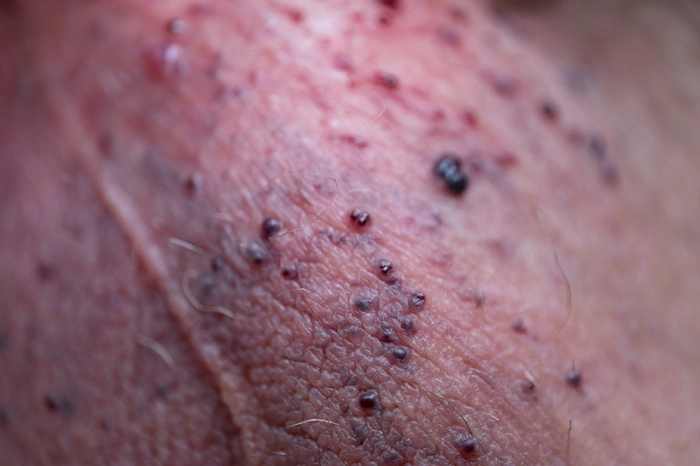
Angiokeratomas are small, usually benign vascular skin lesions. They may appear singly or in groups, including in the genital area, for example on the scrotum. Some are present from birth or childhood, while others develop later in life.
They are usually harmless, but can still cause significant concern or discomfort, especially if they are visible, bleed repeatedly or occur in an intimate area. At Derma-Wien, Dr Lisa Schwarzbauer, who specialises in treating angiokeratomas, assesses the lesions and discusses suitable treatment options with you.
What is an angiokeratoma?
An angiokeratoma forms when small superficial blood vessels become dilated. The overlying skin may be slightly thickened or rough. Angiokeratomas often look like small red, dark red, purple or bluish spots or bumps.
There are different types. A single angiokeratoma can occur on various parts of the body. The type known as angiokeratoma of Fordyce commonly appears in the genital area, particularly on the scrotum in men. Another type may be present at birth or develop in childhood, while other angiokeratomas appear later in life. You can read about other vascular skin lesions on our haemangioma page.
What symptoms can occur?
Angiokeratomas often cause no symptoms. Some may become irritated by friction or bleed after minor injury. When they occur on the scrotum or another intimate area, they may cause embarrassment, anxiety or concern about a sexually transmitted infection.
Angiokeratomas are not sexually transmitted. However, a new or changing skin lesion should be assessed by a doctor, as other skin conditions can look similar.
How is an angiokeratoma diagnosed?
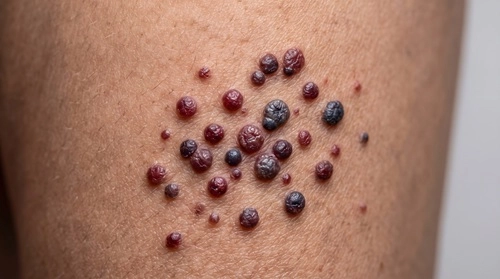 Diagnosis starts with a dermatological examination. The dermatologist assesses the appearance, distribution and history of the lesions. Dermoscopy may help with the assessment.
If a lesion looks unusual or the diagnosis is uncertain, further investigation may be needed. In some cases this can include a skin biopsy. This is important because some pigmented or vascular lesions can resemble an angiokeratoma, for example a bleeding or changing mole.
Nd:YAG laser treatment
Angiokeratomas do not always need treatment. If they cause symptoms or you find them bothersome, Nd:YAG laser treatment may be an option. The laser targets the dilated vessels. Studies describe Nd:YAG as an effective treatment option, particularly for angiokeratomas of Fordyce. The appropriate settings depend on factors such as the size, number and location of the lesions. You can find more about our lasers under laser treatment.
The treated skin may be mildly red for a short time. Other local reactions are possible, depending on the lesion and treatment area. Treatment is generally designed to minimise scarring, but a completely risk-free result cannot be guaranteed. During the consultation, we explain what to expect and whether more than one session may be appropriate.
Consultation with Dr Lisa Schwarzbauer
 Dr Lisa Schwarzbauer is a specialist in dermatology with experience in dermatological laser treatments. She specialises in the treatment of angiokeratomas. During your consultation, she will assess the lesions, answer your questions and explain whether laser treatment may be suitable.
Book a consultation at Derma-Wien. If the lesions feel embarrassing or difficult to discuss, you can raise the concern openly. The consultation takes place in a medical setting with appropriate discretion.
Frequently asked questions about angiokeratomas
Are angiokeratomas dangerous?
Angiokeratomas are usually benign vascular lesions. New, growing, unusually coloured or repeatedly bleeding lesions should still be checked by a dermatologist before treatment is planned.
Can angiokeratomas be present from birth?
Yes. Some types may be present at birth or develop during childhood. Others appear later and may increase over time.
Can angiokeratomas occur on the scrotum?
Yes. Angiokeratomas of Fordyce commonly occur on the scrotum. Similar lesions can also occur on the vulva.
Is an angiokeratoma contagious?
No. An angiokeratoma is not an infection and is not sexually transmitted. A dermatological examination can clarify the diagnosis if you are unsure.
Does every angiokeratoma need treatment?
No. If the diagnosis is clear and the lesion causes no problems, treatment may not be necessary. Treatment can be discussed if the lesions bleed, become irritated or cause personal concern.
What should I expect after Nd:YAG laser treatment?
The skin may be mildly red for a short time. You will receive aftercare advice before treatment. This depends on the area treated and the extent of treatment.
You can find our current prices in our price list.