


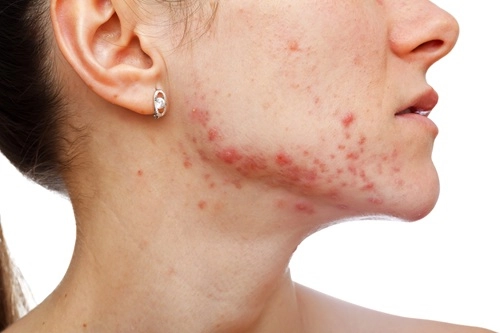
 Skin Rash – Causes, Symptoms and Treatment
Red patches, tiny dots, blisters or hives on your skin? A skin rash can look very different from person to person and has many possible causes.
Some rashes appear out of nowhere, others develop over several days. Your skin may itch, burn or hurt – or the rash may not bother you at all. It can stay in one small area or spread across larger parts of the body.
Photo: Ocskay Bence – stock.adobe.com
Possible causes range from eczema and allergies to infections, inflammatory skin conditions and reactions to medication.
Because many skin conditions look alike, the cause often can't be identified reliably just by looking at the rash. That's why a new, persistent or recurring skin rash should be checked by a dermatologist.
At our dermatology practice in Vienna, we diagnose and treat both acute and chronic skin rashes.
- What is a skin rash?
- What causes a skin rash?
- Itchy skin rash – what could be behind it?
- Skin rash without itching
- Rash on the face
- What do red spots on the skin mean?
- What are hives (wheals)?
- What do blisters on the skin mean?
- What can cause a scaly rash?
- Why does a rash appear suddenly?
- How is a skin rash diagnosed?
- How is a skin rash treated?
- When should I see a dermatologist about a rash?
- Getting a skin rash checked by a dermatologist in Vienna
What is a skin rash?
A skin rash is any new, visible change in the skin. Depending on the cause, these changes can look very different.
A rash can show up as:
red patches or dots
small bumps (papules)
hives (wheals)
blisters
pustules
scaling
crusts
weeping, oozing patches
dry or cracked skin
For a diagnosis, it's not only important what the rash looks like. Where on the body it appears, how it spreads, how it develops over time and any other symptoms matter just as much.
What causes a skin rash?
A skin rash isn't a disease in itself – it can be a symptom of many different skin conditions or other illnesses.
Possible causes include:
Eczema: Inflammatory skin reactions can cause redness, scaling, blisters and sometimes intense itching. Examples include atopic dermatitis, contact dermatitis and hand eczema.
Allergic reactions: Contact with certain substances or taking certain medications can trigger skin reactions.
Urticaria / hives: Typical signs are hives (wheals) that appear suddenly and are usually very itchy. They can change size and position and then disappear again. Sometimes there is also swelling, for example of the lips or eyelids.
Psoriasis: Often causes clearly defined, red patches of skin with scaling.
Fungal skin infections: Fungal infections can cause red, scaly and sometimes itchy patches of skin.
Scabies: A typical symptom is intense itching, which can be especially bad at night.
Rosacea: Persistent or recurring redness, small visible blood vessels as well as inflamed bumps and pustules, mainly on the face.
Perioral dermatitis: Typical signs are small red bumps and pustules, mainly around the mouth. The areas around the nose and eyes can also be affected.
In addition, viral infections, bacterial infections, insect bites and drug reactions can also cause a skin rash.
Itchy skin rash – what could be behind it?
Itching is one of the most common symptoms of a skin rash.
Possible causes of an itchy skin rash include:
eczema
very dry or irritated skin
Severe or long-lasting itching should be checked by a dermatologist – especially if you can also see changes in your skin.
Skin rash without itching
Not every rash itches. Red patches, bumps or other skin changes can also appear without any itching.
Possible causes include inflammatory skin conditions, infections or reactions to medication. So the fact that a rash doesn't itch tells you little about what's causing it.
Rash on the face
The skin on your face is sensitive to outside influences. A rash on the face can be caused by rosacea, perioral dermatitis, eczema, allergic or irritant reactions and skin care products that don't agree with your skin, among other things.
Exactly where the rash appears is important for the diagnosis. Redness on the cheeks and nose, for example, can have different causes than small bumps around the mouth, nose or eyes.
If skin changes on your face last a long time or keep coming back, it's a good idea to have them examined by a dermatologist.
What do red spots on the skin mean?
Red spots on the skin are among the most common changes people notice as a rash.
They can appear alone or over large areas, be flat or raised, and come with itching, scaling, pain or other symptoms.
Possible causes include eczema, allergic reactions, urticaria, rosacea, psoriasis, infections or fungal skin infections.
So the red colour alone usually isn't enough to make a reliable diagnosis.
What are hives (wheals)?
Hives, also called wheals, are clearly defined, raised areas of skin that are usually skin-coloured to red and often very itchy.
They are typical of urticaria, also known as nettle rash.
A characteristic feature is that individual hives can disappear within a short time, while new ones appear elsewhere at the same time or later on.
If the hives keep coming back or last longer than 24 hours, the cause should be checked by a doctor.
If you also have swelling in the mouth or throat, difficulty breathing or feel faint or dizzy, seek emergency medical help immediately.
What do blisters on the skin mean?
Small blisters on the skin can occur with various conditions.
Possible causes include certain types of eczema, allergic or irritant reactions and infections such as herpes or shingles.
For the diagnosis, the number and distribution of the blisters and any other symptoms are important. Whether the affected areas itch, burn or hurt can also make a difference.
Don't pop or open blisters yourself.
What can cause a scaly rash?
A scaly rash can occur with eczema, psoriasis, fungal skin infections or seborrhoeic dermatitis, for example. Very dry skin can also cause redness and scaling.
Because these conditions are treated differently, a scaly rash that lasts a long time or keeps spreading should be examined by a dermatologist.
Why does a rash appear suddenly?
A rash that appears suddenly can have various triggers. These include allergic reactions, urticaria, infections, medication, contact with irritating substances or insect bites.
When you see a doctor, the following questions can be important:
When did the rash first appear?
Where on the body did it start?
Has it spread since then?
Does the skin itch, burn or hurt?
Have you recently started any new medication?
Have you used any new creams, cosmetics or detergents?
Do you have a fever or other symptoms?
Does anyone around you have similar skin changes?
The answers can give important clues about the cause.
How is a skin rash diagnosed?
It all starts with a thorough dermatological examination of the skin. The appearance, distribution, colour and borders of the skin changes, together with your medical history, often already provide important clues.
Depending on the findings and the suspected cause, further tests may be useful, such as:
-
dermoscopy
-
swab
-
blood tests
-
skin biopsy
Not every rash needs additional tests. Which tests make sense depends on your individual skin findings and symptoms.
How is a skin rash treated?
The treatment of a skin rash depends on its cause, so there is no one-size-fits-all therapy.
Depending on the diagnosis, options include skin care, anti-inflammatory creams, anti-allergy medication, antifungal treatment for fungal infections or targeted therapies for chronic inflammatory skin conditions.
The key is to find out what is causing the rash and tailor the treatment to it.
When should I see a dermatologist about a rash?
It's a particularly good idea to see a dermatologist if the rash:
appears for no obvious reason
lasts for a long time
keeps spreading
keeps coming back
itches, burns or hurts a lot
develops blisters, crusts or weeping patches
doesn’t get better despite treatment
Seek emergency medical help immediately if a rash comes with difficulty breathing, swelling in the mouth or throat, feeling faint or dizzy, or if you feel very unwell.
A rash that spreads quickly and comes with a fever, or if your general condition gets noticeably worse, should also be checked by a doctor right away.
Getting a skin rash checked by a dermatologist in Vienna
A skin rash can have many different causes. A dermatological examination helps to classify the skin changes, identify possible causes and start the right treatment.
At our dermatology practice in Vienna, we diagnose and treat acute skin rashes as well as chronic and recurring skin conditions.
You are welcome to book an appointment at our practice in Vienna.
For more information and personal advice, our team at the practice in Vienna is happy to help.
 About the author
Dr. Dariana Borlea has extensive experience in diagnosing skin rashes and treating them with modern methods. She places particular emphasis on carefully identifying the cause and choosing the right treatment for each individual patient.
Published on: 26 September 2026
FAQ – frequently asked questions about skin rashes
What is the most common cause of a skin rash?
There's no single cause of a skin rash. Common causes include eczema, allergic or irritant reactions, infections, urticaria and other inflammatory skin conditions. The appearance, distribution and any other symptoms help with the diagnosis.
What can cause an itchy skin rash?
An itchy rash can be caused by eczema, atopic dermatitis, urticaria, allergic reactions, scabies, fungal skin infections or insect bites, among other things. If the itching is severe or doesn't go away, the cause should be checked by a dermatologist.
Can stress cause a skin rash?
Stress can affect the course of various skin conditions and make existing symptoms worse – this is well known with atopic dermatitis, for example. However, a new rash shouldn't automatically be put down to stress, as there are many other possible causes.
Is a skin rash contagious?
That depends on the cause. Eczema, psoriasis and urticaria are not contagious, for example. Certain fungal, viral, bacterial or parasitic infections, on the other hand, can be passed on.
When is a skin rash dangerous?
A rash needs immediate medical attention if it comes with difficulty breathing, swelling in the mouth or throat, feeling faint or dizzy, or feeling very unwell. A rash that spreads quickly with a fever, or a noticeable decline in your general condition, should also be assessed by a doctor quickly.